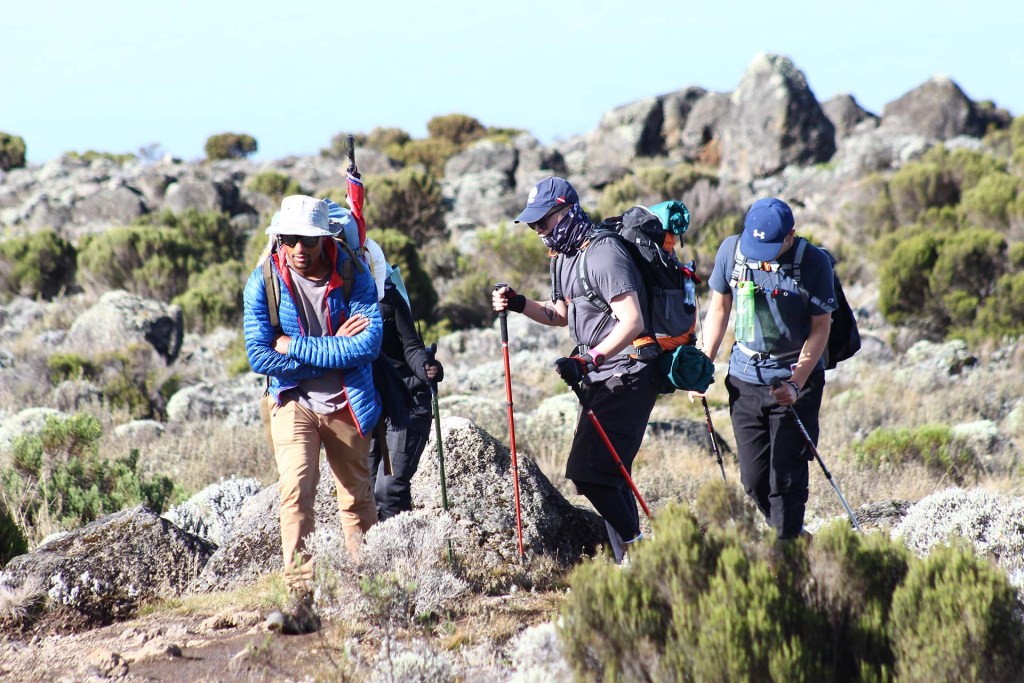
Many travelers only see the final package price without understanding what is included behind the scenes. Organizing a safe Kilimanjaro climb requires a large team, proper equipment, experienced staff, and strong logistical planning.
Below are the major components that form the true cost of a Kilimanjaro expedition.
Kilimanjaro National Park Fees
Every climber must pay official park fees required by Tanzania National Parks Authority (TANAPA).
These fees usually include:
- Conservation fees
- Camping fees
- Rescue fees
- Crew fees
- VAT taxes
- Forest fees on certain routes
Depending on the route and duration, park fees alone can range between approximately $700 and $1,200 per climber.
These costs are fixed and apply to every licensed operator on the mountain.
Crew Wages and Porter Welfare
A successful Kilimanjaro climb depends heavily on the support team working behind the scenes. This team usually includes:
- Mountain guides
- Assistant guides
- Cooks
- Porters
Professional operators invest heavily in experienced crews because they directly affect safety, morale, and the overall client experience.
At Jaribu Africa, we believe porters and mountain crews deserve fair wages, proper meals, suitable equipment, and respectful working conditions.
Unfortunately, some low-budget operators reduce costs by underpaying crews or relying almost entirely on client tips.
Responsible tourism means choosing operators who treat their staff fairly and ethically.
Safety on Kilimanjaro
Safety is one of the most important parts of any mountain expedition.
Although Kilimanjaro does not require technical climbing skills, altitude sickness can affect anyone regardless of age or fitness level. Proper monitoring and emergency preparation are essential.
Professional operators invest in:
- Wilderness First Responder training
- First aid certifications
- Emergency oxygen systems
- Pulse oximeters for daily health checks
- Altitude monitoring procedures
- Emergency evacuation planning
At Jaribu Africa, client safety always comes first. Our guides conduct regular health checks during the climb and are trained to recognize altitude-related symptoms early.
Equipment and Camping Quality
Good equipment plays a major role in both comfort and safety during the climb.
Quality Kilimanjaro climbs should include:
- Waterproof mountain tents
- Comfortable sleeping mattresses
- Dining tents and tables
- Clean cooking equipment
- Proper food storage
- Reliable transport vehicles
Low-quality or poorly maintained equipment may cause discomfort, illness, or unnecessary stress during the trek.
Accommodation Before and After the Climb
Most Kilimanjaro packages also include hotel accommodation before and after the trek.
Good accommodation allows climbers to:
- Rest properly before starting the climb
- Recover comfortably after the summit
- Organize gear and luggage smoothly
- Enjoy a stress-free arrival and departure experience
Accommodation quality also affects the final package price.